

EV Charger Grants for Flats & Renters 2026
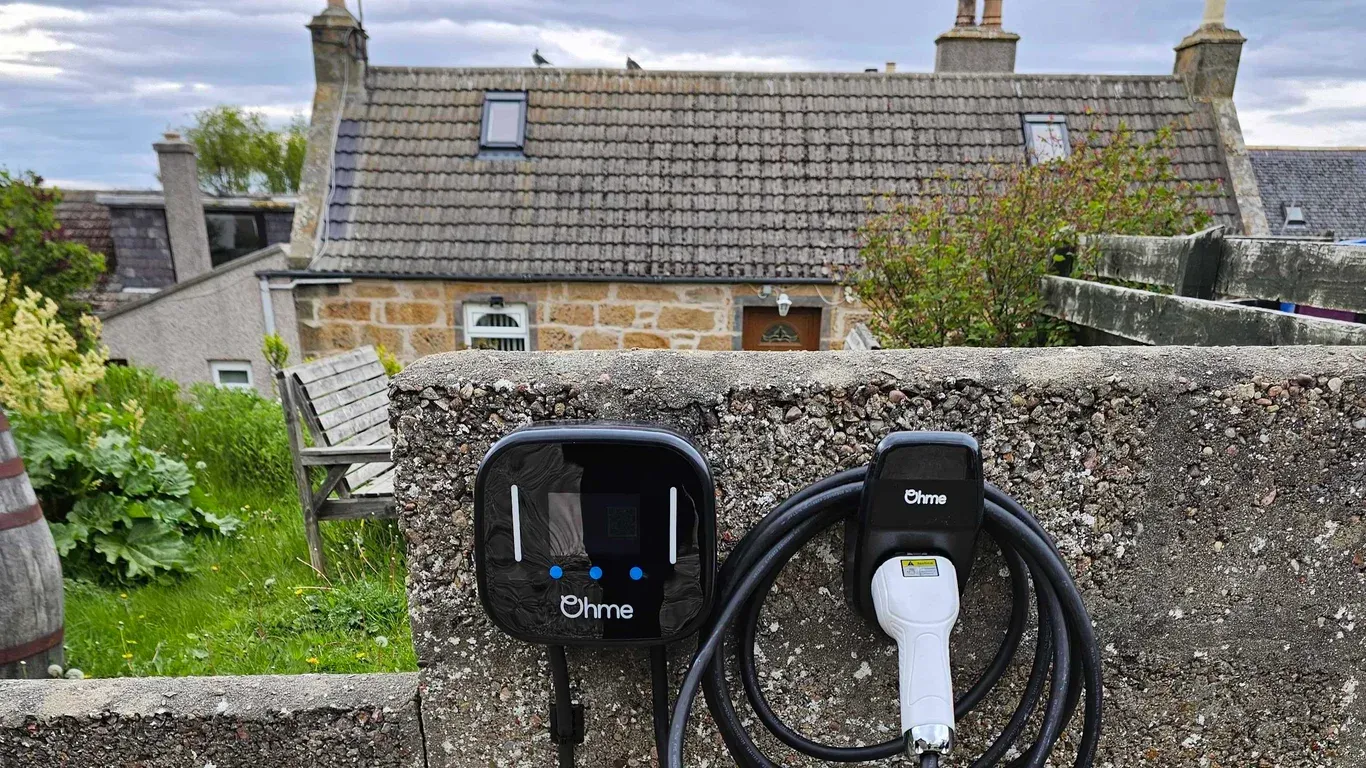
Eligible applicants can receive 75% of eligible purchase and installation costs, capped at £500 per socket through the household EV chargepoint grant schemes, subject to each scheme’s cost cap and property, vehicle and parking rules. Funding is available until 31 March 2027. For flats, renters and residential landlords, the customer applies first and must receive OZEV eligibility confirmation before installation; the approved installer submits the claim afterwards.
Key facts
- Three household EV chargepoint grant schemes are open now, funded to 31 March 2027 (flats and renters, residential landlords, and homes with on-street parking)
- The household grants cover 75% of eligible costs, capped at £500 per socket from 1 April 2026
- The £500 rate is not universal: workplace and education institution schemes have separate eligibility rules
How much is the EV chargepoint grant in 2026?
The three household schemes can cover 75% of eligible purchase and installation costs, capped at £500 per socket from 1 April 2026. Funding runs to 31 March 2027, subject to the scheme rules. An application does not guarantee an award; wait for the required approval before installation.
For the flats and renters grant and residential landlord grant, the customer starts the application online. After OZEV confirms eligibility, an approved installer carries out the work and submits the grant claim. Check the separate process for the on-street parking scheme.
The three household schemes have separate conditions. An increase in the maximum grant does not mean every flat, rented home or property with on-street parking qualifies.
Which three household schemes does this cover?
The £500 rate applies across three separate household routes, each aimed at a different situation where a driveway charger was never an option before.
Flats and renters
Covers households in flats or rented homes who want a chargepoint fitted, typically where there is a dedicated or allocated parking space and the landlord or building owner agrees to the installation.
Residential landlords
Covers landlords installing a chargepoint for a tenant at a residential property, so the cost of fitting one is not left entirely to the person renting the home.
On-street parking
Covers households whose only parking is on the street rather than off it, where a chargepoint or cross-pavement solution is being installed to serve that property.
Why does a driveway usually get treated differently?
Grant schemes were originally built around the simplest case: a homeowner with a private driveway or garage, running a cable straight from the house to a car parked a few metres away. Flats, rentals, and on-street parking all break that simple picture in different ways, whether that is shared ownership of the parking area, a landlord who needs to agree to permanent work, or a charger that has to serve a car parked on a public street rather than private land.
The 2026 rules exist precisely because those situations kept being underserved by a scheme designed around the easiest case. Knowing which of the three categories your situation falls into is the main thing that determines how straightforward your application will be.
Is the £500 rate universal?
No, and this is where a lot of adverts blur the detail. The £500 figure is specific to the three household schemes above. The Workplace Charging Scheme also moved to £500 per socket, but it runs on its own separate terms for businesses installing chargepoints for staff or fleet vehicles. State-funded education institutions are on a different scheme again, with grants of up to £2,000 per socket.
Being a homeowner, renter or landlord does not by itself establish eligibility. Check the conditions of the relevant household scheme, including the parking arrangements and any vehicle requirements, before relying on a grant deduction.
| Scheme | Who it is for | Grant amount | The catch |
|---|---|---|---|
| Household schemes | Flats, rented homes, residential landlords, and on-street parking | £500 per socket | Subject to normal eligibility checks, funded to 31 March 2027 |
| Workplace Charging Scheme | Businesses installing chargers for staff or fleet vehicles | £500 per socket | Runs on separate terms for businesses, not the household scheme |
| Education institutions | State-funded education institutions | Up to £2,000 per socket | A different scheme again, not the £500 household rate |
How do you actually claim it?
For flats, renters and residential landlords, register and apply through the official scheme service. You and your installer receive the outcome by email. Wait for OZEV to confirm eligibility before the charger is installed.
The approved installer then completes the installation and submits the claim with the required evidence. Agree how the grant deduction appears on your quote. If you are applying through the on-street parking scheme, follow its own application instructions and obtain the required permissions.
If you rent rather than own, the same process applies, but your landlord needs to be part of the conversation from the start. A landlord who agrees in principle to a chargepoint still needs to confirm that in writing before an installer can proceed, since permanent electrical work at a rented property is not something a tenant can authorise alone.
What does a charger typically cost after the grant?
Costs vary with the property, the cable run, and whether any additional groundworks are needed for an on-street installation, so treat any figure as an estimate rather than a fixed price. As a general shape: a straightforward flat or rented-home installation with a nearby parking space tends to sit toward the lower end of typical domestic chargepoint pricing once the £500 grant is deducted, while on-street installations that need cross-pavement work or additional groundworks usually cost more before the grant is applied.
The only way to get an accurate figure for your own property is a proper site assessment, since parking layout and cable distance are the two things that move the price most.
What this means for you
If you have been putting off an EV charger because you assumed flats, rented homes, and on-street parking were excluded from grant funding, that is no longer the case. All three situations are covered by the same £500-per-socket scheme, funded until 31 March 2027.
The practical next step is the same regardless of which of the three schemes applies to you: get a site assessment from an OZEV-approved installer who can confirm your eligibility and handle the grant application as part of the quote, rather than as a separate step afterwards.
Funding windows like this one do close eventually, so if a chargepoint has been on your list for a while, applying sooner rather than later means you are working with a confirmed rate rather than hoping it still applies when you get around to it.
Not sure if your flat, rental, or on-street parking space qualifies? Check your EV charger options and we will tell you straight.
See our EV charging installation serviceFrequently asked questions
Can renters get an EV charger grant, or only homeowners?
Renters are covered under the flats and renters household scheme, provided there is a suitable parking space and the landlord or building owner agrees to the installation. The grant is claimed by the installer, not the renter.
Does the EV chargepoint grant apply to on-street parking?
Yes. Households whose only parking is on-street are covered by a dedicated scheme within the same £500-per-socket household funding, running until 31 March 2027.
Is the £500 EV charger grant the same for businesses and schools?
No. The Workplace Charging Scheme also moved to £500 per socket but has its own separate terms for businesses, and state-funded education institutions can claim up to £2,000 per socket under a different scheme entirely.
How do I apply for the EV chargepoint grant myself?
For the flats and renters grant, you apply through the official service and wait for OZEV eligibility confirmation before installation. Your approved installer submits the claim afterwards. Residential landlords use the corresponding landlord service; on-street parking has separate guidance.
When does the EV charger grant funding end?
The three household schemes covering flats and renters, residential landlords, and on-street parking are funded until 31 March 2027.
Does my landlord need to agree before I can claim the grant?
Yes. Permanent electrical work at a rented property needs the landlord or building owner to agree in writing before an OZEV-approved installer can proceed, even where the tenant is the one arranging the installation.
Sources
Related guides
Last verified: 20 July 2026. We re-check the facts on this page regularly; if a scheme or rate has changed since, the official source linked above is definitive.