

Solar on a Scottish Tenement: The Rules
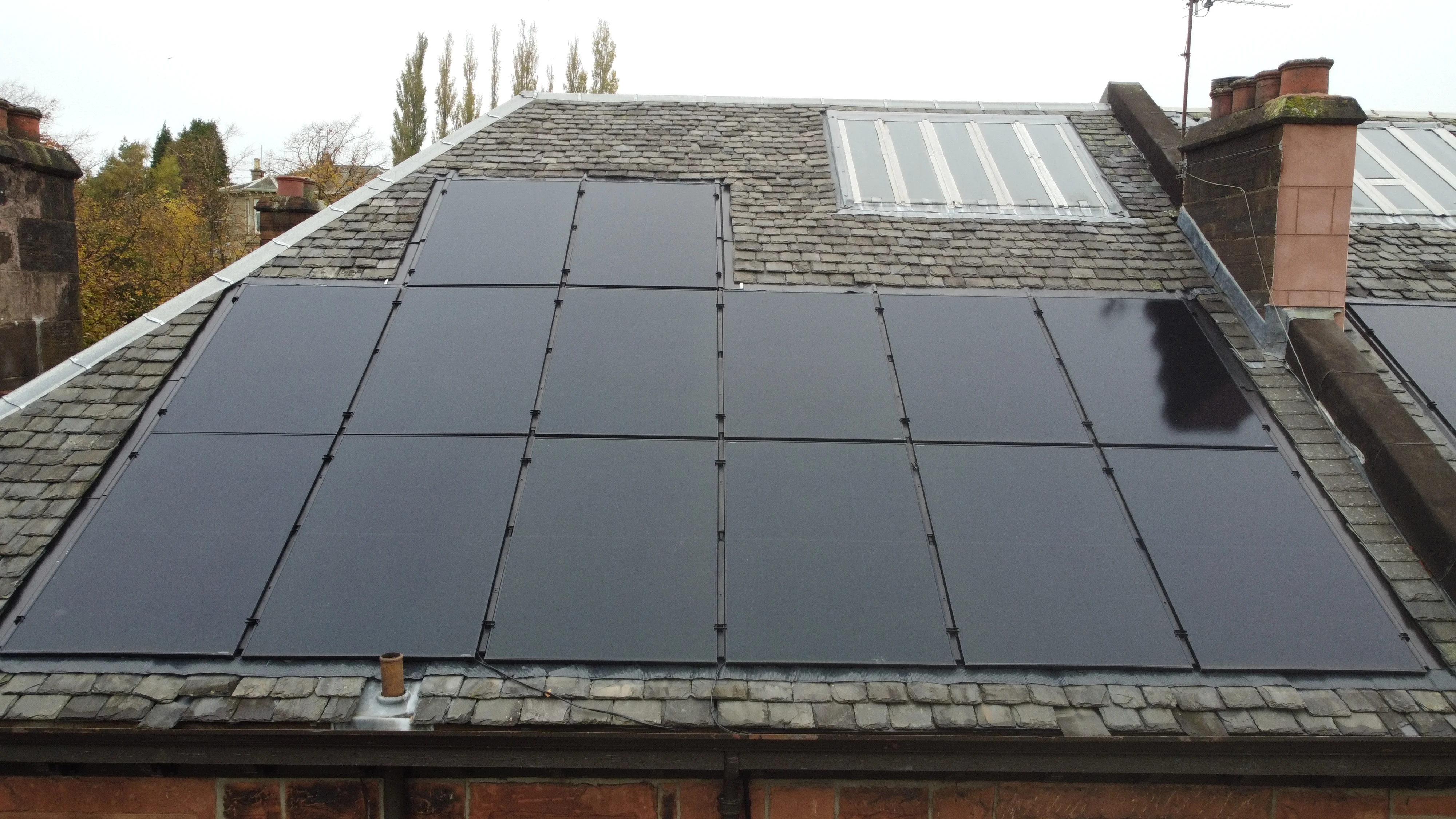
Yes, you can put solar panels on a tenement or flat in Scotland: no law bans it, and tenement owners do get it done. But solar on a tenement roof is legally different from solar on a house. Because the roof is shared property, fitting panels for the first time counts as an "improvement" rather than routine maintenance under the Tenements (Scotland) Act 2004, so the default is that every affected owner has to agree before work starts. On top of that, flats and tenements always need a building warrant from the council, with no exemptions, even when a similar job on a detached house would not.
Neither of those things makes it impossible. It just means the paperwork happens in a different order to a house: title deeds first, then owners, then warrant, then install.
Key facts
- First-time solar on a tenement is an "improvement", not maintenance, under the Tenements (Scotland) Act 2004
- Where title deeds are silent on this, unanimous consent of the affected owners is the default before work can start
- Flats and tenements always need a building warrant, with no exemptions, unlike some single houses
Can you put solar panels on a tenement or flat in Scotland?
Yes. Tenement and flat owners across Scotland can and do fit solar: the law adds steps and paperwork, it does not shut the door. What makes it different from a house is who owns the roof.
On a detached or semi-detached house, the roof belongs to one owner, so the decision to fit solar sits with that one household. On a tenement, the roof is a shared part of the building. Nobody owns "their bit" of it outright, so a change to it is treated as a decision that affects every flat underneath, not just the one commissioning the work.
That shared-ownership starting point is why the legal test is different from day one, before any planning or building-standards question even comes into it. It also explains why a tenement enquiry usually takes longer to reach a quote than a house does: we are not just measuring a roof, we are working out who else needs to be part of the conversation.
It is worth being clear about what this rule is not. It is not a ban on tenement solar, and it is not unique to solar, the same shared-roof logic applies to other roof-level changes like a new aerial mast or roof-level extension. Solar simply falls into that same "improvement" category because the roof has never had it before.
Why does it count as an "improvement" and not "maintenance"?
The Tenements (Scotland) Act 2004 draws a line between maintenance (keeping something the building already has in working order, like re-slating a leaking roof) and improvement (adding something new the building did not have before). Fitting solar panels for the first time falls on the improvement side of that line, because there was no solar array there to begin with.
That distinction matters because Scotland's Tenement Management Scheme, the default rulebook that fills gaps when title deeds are silent, only gives owners automatic authority to organise and cost-share maintenance. It does not extend the same automatic authority to improvements. So a decision that would need a simple majority for a repair can need everyone on board for a solar installation.
Do I need every owner's agreement?
In most cases, yes, if your title deeds do not already say something different. Where the deeds are silent on how improvement decisions get made, the default under the Tenements (Scotland) Act 2004 is unanimous consent of the owners whose property the roof serves. In practice, that means everyone under that section of roof needs to say yes before panels go up, not just a majority.
The first thing to check, and it can change everything, is your own title deeds. Some tenements have specific "real burdens" or a factoring agreement that already sets out a different decision-making process for improvements. If yours does, that overrides the general default. If it does not, assume you are working towards unanimous agreement and plan the conversation with your neighbours accordingly.
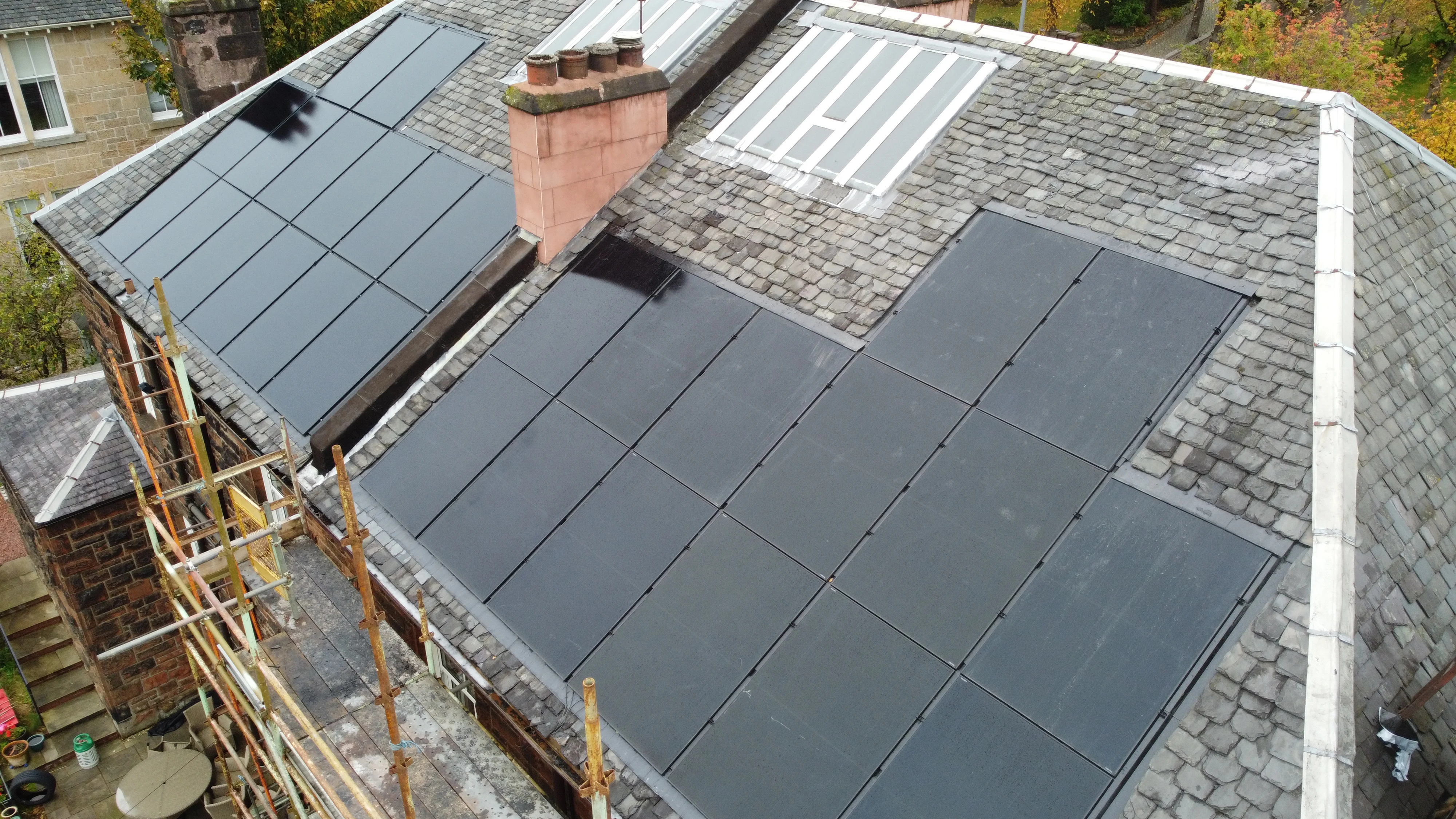
Do I need a building warrant?
Yes, always. This is one area where flats have a stricter rule than houses. A single or two-storey house can sometimes install roof solar without a building warrant, provided the roof can be shown to take the extra load. Flats and tenements do not get that option: a building warrant is required in every case, regardless of the building's height or condition.
The warrant process checks things like structural loading, fire safety on shared escape routes, and how the electrical installation ties into the building. It is a separate step from planning permission and from any owners' agreement, and it typically needs its own application to your local council's building standards team.
What order do the steps happen in?
Four steps, roughly in this order. First, check your title deeds to see whether they already set out a process for improvements, rather than assuming the general default applies. Second, get the affected owners' agreement in writing, since unanimous consent is usually needed where the deeds are silent. Third, apply for the building warrant, which covers the structural and safety side regardless of what the owners have agreed. Fourth, once consent and warrant are both in place, the installation itself can go ahead.
Skipping the order tends to cause the most friction. Agreeing informally with neighbours before checking the deeds, or booking an installer before a warrant application is even underway, both create delays later rather than saving time now.
A useful habit is to put the owners' agreement in writing even when everyone is friendly about it, rather than relying on a verbal yes at the close. A simple written note signed by each affected owner, kept alongside the title deeds, is what most factors and future buyers will want to see if the flat is ever sold. It also protects you if a neighbour later has second thoughts once scaffolding actually appears.
| Step | What it covers | Who's involved | What it means for you |
|---|---|---|---|
| 1. Check the title deeds | Whether the deeds already set out a process for improvements | Your title deeds: a real burden or factoring agreement can override the default | If the deeds are silent, the Tenements (Scotland) Act 2004 default applies instead |
| 2. Get the owners' agreement | Getting the affected owners' agreement in writing | Unanimous consent of the owners whose property the roof serves | Usually needed where the deeds are silent, not just a majority |
| 3. Apply for the building warrant | A separate application covering the structural and safety side | Your local council's building standards team | Required regardless of what the owners have agreed |
| 4. Install | The installation itself | You, once consent and warrant are both in place | The last step, not the first: skipping the order creates delays, not savings |
Your own title deeds come first: some already set out a different process, which overrides the default above.
Does the conservation area overlay apply as well?
Often, yes. A large share of Scotland's traditional tenement stock, particularly in the Victorian and Edwardian streets of Glasgow and Edinburgh, sits inside a conservation area. Since 24 May 2024, roof solar in conservation areas has generally not needed planning permission either, as long as it is not on the principal elevation or a side elevation that fronts a road.
For a tenement, that conservation area question sits alongside the owners' consent and warrant requirements, not instead of them. Our companion guide covers the conservation area and planning permission rules for Scotland in full: read Solar Planning Permission Scotland for the detail on what counts as a principal elevation and what does not.
What this means for you
Tenement solar is genuinely harder to arrange than solar on a standalone house, but it is not a dead end. The extra steps are about sequencing and paperwork, not about the panels themselves working any differently once they are up.
Before we quote a tenement job, we check the same things this guide walks through: what the title deeds actually say, where the building sits in relation to conservation area boundaries, and what the building warrant application will need to cover. Getting that groundwork right before scaffolding goes up is what keeps a tenement install on schedule instead of stalling on a technicality partway through.
If you are the one pushing the project forward among several owners, expect the conversation and paperwork stage to take longer than the physical install itself. That is normal for shared buildings and is not a sign that anything has gone wrong.
Still working out whether your building qualifies. Get in touch and we will talk through your title deeds, your building warrant and what a realistic timeline looks like, no pressure either way.
Ask about solar on your tenementFrequently asked questions
Can one flat owner install solar panels without asking the other owners?
Usually not, if it is the first solar installation on that roof. Because it counts as an improvement rather than maintenance, and the roof is shared property, the default under the Tenements (Scotland) Act 2004 is that all affected owners need to agree, unless your title deeds already set out a different process.
Do flats need planning permission for solar panels in Scotland?
Often no, on the same basis as houses: most roof solar counts as permitted development. But a tenement install still needs a building warrant regardless of the planning position, and if the building is in a conservation area or is listed, those rules apply on top.
Why do tenements always need a building warrant when some houses do not?
Because the exemption available to single and two-storey houses, where the roof can be shown to take the load without a warrant, does not extend to flats and tenements. Council building standards guidance is consistent that a warrant is required for flats in every case.
What if my title deeds do not mention solar or improvements at all?
That is the most common situation, and it is exactly when the Tenements (Scotland) Act 2004 default applies: unanimous consent of the affected owners before an improvement like solar can go ahead. Checking the deeds first tells you whether you are working from that default or from something the deeds already specify.
Is it worth trying to get solar on a Glasgow or Edinburgh tenement?
Many owners do get there, but it takes more coordination than a house would. Starting with the title deeds, having the owners' conversation early, and lining up the building warrant application in parallel is what keeps the process moving rather than stalling.
Sources
Last verified: 20 July 2026. We re-check the facts on this page regularly; if a scheme or rate has changed since, the official source linked above is definitive.