

Solar Planning Permission Scotland
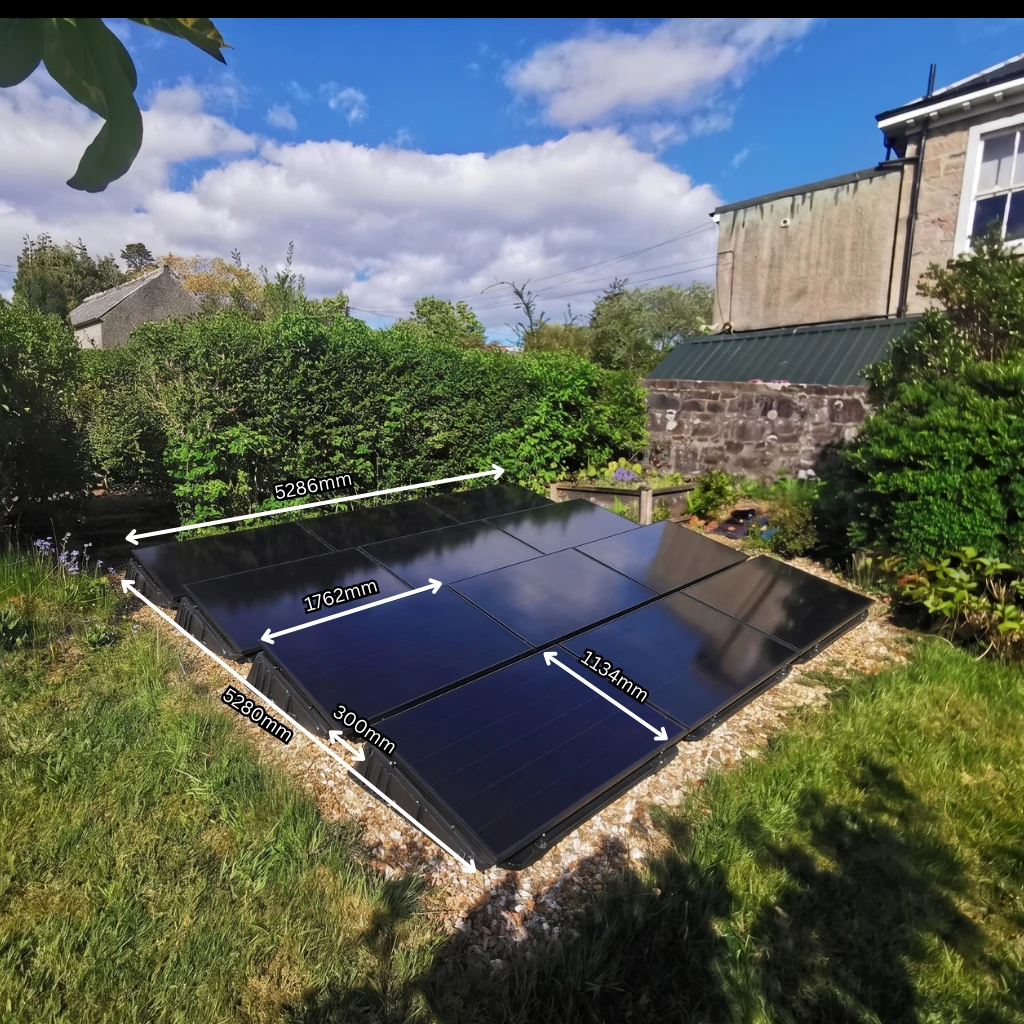
Most Scottish homes need no planning permission to fit solar panels on the roof. Since 24 May 2024, most homes in conservation areas are covered too, as long as the panels go on the rear or a side that does not front a road. Listed buildings are the one clear exception: they always need listed building consent, whatever the elevation.
Key facts
- Since 24 May 2024 (SSI 2024/102), roof solar in a conservation area is permitted development except on the principal elevation or a side elevation fronting a road
- Listed buildings are excluded from these rights altogether: listed building consent is required regardless of which side of the roof you use
- Standard condition either way: panels must not protrude more than 1 metre from the wall, roof plane, roof ridge or chimney
Do I need planning permission for solar panels in Scotland?
For the large majority of houses, no. Roof-mounted solar panels are treated as "permitted development" under Scottish planning law, which means you can fit them without applying for planning permission, in the same way you can put up a satellite dish or a garden shed.
That general rule has always had a catch, though: conservation areas and listed buildings were treated differently, and often needed permission where an ordinary house did not. The rules on conservation areas changed in 2024, which is the part most homeowners, and some installers, have not caught up with yet.
What changed for conservation areas in May 2024?
The Town and Country Planning (General Permitted Development) (Scotland) Amendment Order 2024, known by its reference SSI 2024/102, came into force on 24 May 2024. It extended permitted development rights for roof solar into conservation areas, which previously needed a planning application in almost every case.
Before this change, a conservation-area home fitting solar panels typically had to submit a full application and wait for a decision, adding weeks and sometimes cost to a straightforward job. The 2024 order removed that requirement for most conservation-area roofs, with two specific exceptions covered below. Because the change is relatively recent, some older advice online, and some installers who have not checked the current legislation, still describe conservation areas as needing permission across the board. That is now out of date.
What is and isn't allowed in a conservation area now?
Under the current rules, roof solar in a conservation area is permitted development, meaning no planning application is needed, everywhere except two situations: panels on the principal elevation, and panels on a side elevation that fronts a road.
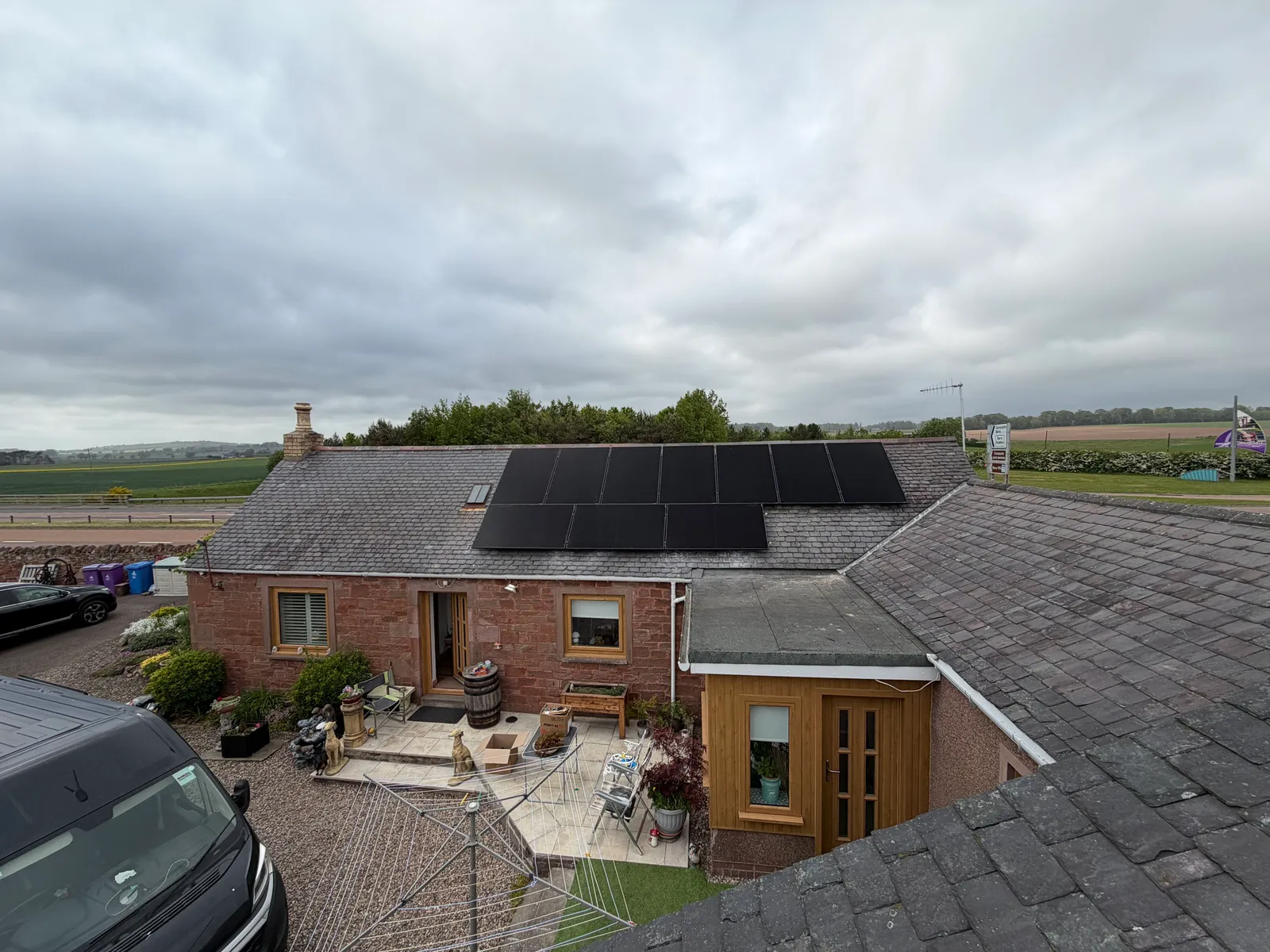
In practice, that means a rear roof slope, or a side roof slope that does not face a road, is normally fine without permission. A front-facing roof slope on a conservation-area house, or a side slope that a road runs past, still needs a planning application. This is exactly the kind of detail a roof survey should flag before any quote is finalised, since it affects timing rather than whether solar is possible at all.
| Roof situation | Permission needed? | Basis |
|---|---|---|
| Standard house roof (not a conservation area, not listed) | No | Permitted development, like a satellite dish or garden shed |
| Conservation area home, rear roof or non-road-facing side | No | Permitted development since SSI 2024/102 (24 May 2024) |
| Conservation area home, principal elevation or road-facing side | Yes | One of the two exceptions under SSI 2024/102, needs a planning application |
| Listed building, any elevation | Yes | Excluded from permitted development rights, needs listed building consent |
Conservation area boundaries are set locally, and we confirm this as a standard part of every roof survey, before any quote is finalised.
What about listed buildings?
Listed buildings sit outside all of this. The 2024 changes, and the permitted development rights for roof solar generally, do not apply to a listed building. Listed building consent is required for solar panels regardless of which elevation you use, front, rear or side.
That does not mean solar is off the table for a listed building. It means the process runs through your local authority's listed building consent procedure rather than permitted development, and the panel positioning, mounting method and visual impact tend to get more scrutiny. Worth knowing early, since it changes the timeline of a project, not just the paperwork.
Are there limits on how far panels can stick out?
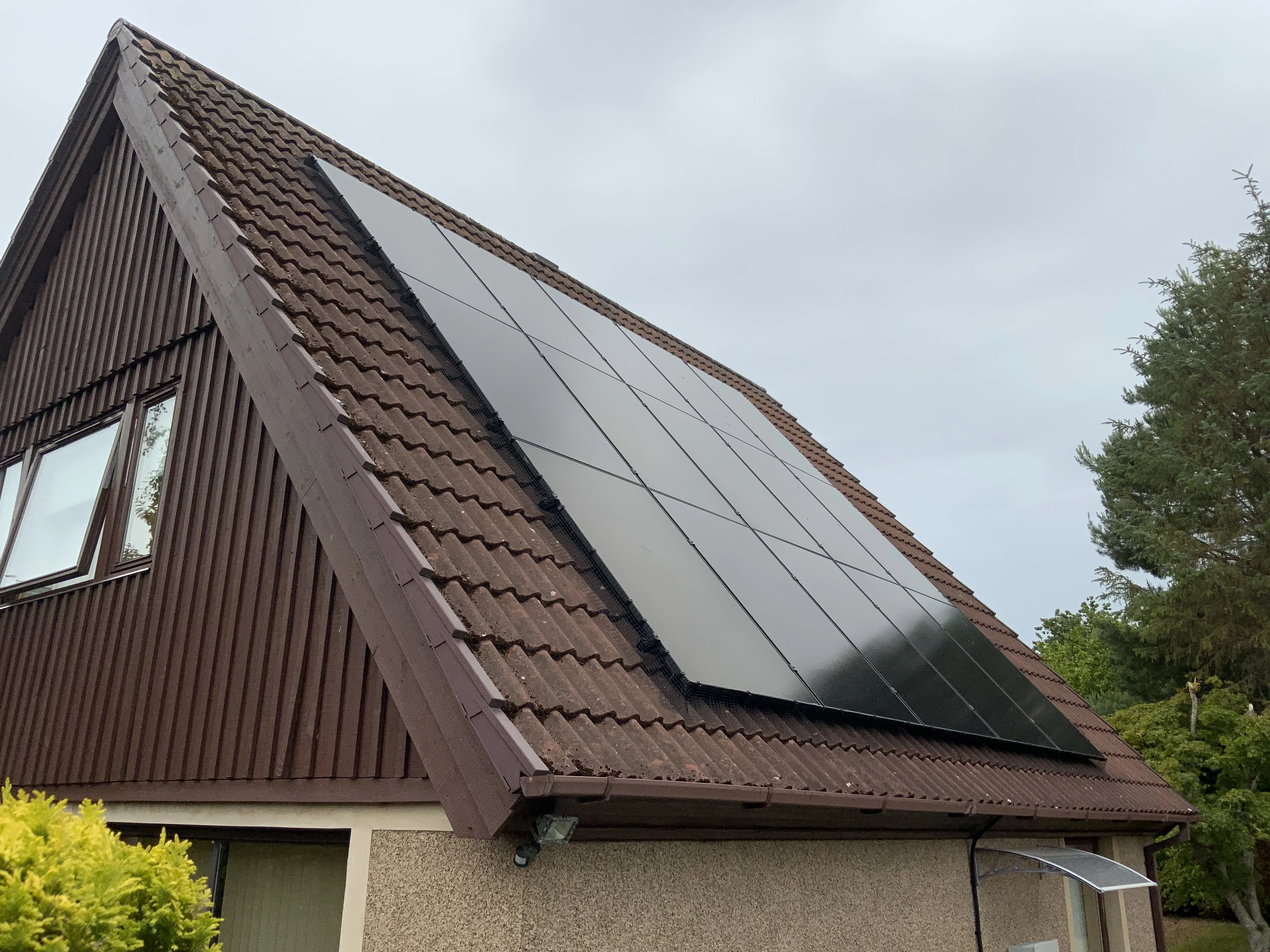
Yes. Even where solar counts as permitted development, there is a standard condition: panels must not protrude more than 1 metre from the external wall, the roof plane, the roof ridge, or a chimney. That 1 metre limit applies across the board, not only at the ridge line, so it covers side walls and chimneys too, not just how high the array sits above the roofline.
For the overwhelming majority of standard roof-mount solar installations, panels sit close to the roof surface and are nowhere near this limit. It mostly matters for unusual mounting setups, such as panels angled well away from the roof pitch to improve orientation, which is another reason a proper survey looks at mounting method, not just panel count.
What about flats and tenements?
Everything above is written for houses. Flats and tenements, common across Glasgow and Edinburgh, run under a different set of rules again: shared-roof ownership means solar usually counts as a building "improvement" rather than routine maintenance, which brings in the Tenements (Scotland) Act 2004 and typically means every affected owner has to agree, plus a building warrant is always needed regardless of the building's height. That is a substantial enough topic that it gets its own guide: see our full breakdown of solar on a Scottish tenement for the step-by-step process.
What this means for you
For most houses in Scotland, planning permission is not the obstacle people expect it to be. The exceptions are narrow and specific: a conservation-area home fitting panels on a front-facing or road-facing side roof, or any listed building. Everything else falls under permitted development, subject to the standard 1 metre protrusion condition.
Rules can vary slightly in how a local authority interprets edge cases, and conservation area boundaries are set locally, so if you are at all unsure whether your street is inside one, your council's planning portal is the definitive check. We also confirm this as a standard part of every roof survey, before any quote is finalised, so you are never guessing.
Not sure whether your home sits in a conservation area, or what your roof allows? Have a no-pressure chat with our Glasgow team, we check the planning position as standard during every survey.
Talk to our Glasgow team about your roofFrequently asked questions
Do listed buildings ever get permitted development rights for solar?
No. Listed buildings are excluded from these permitted development rights entirely, so listed building consent is required whatever elevation the panels go on. This has not changed under the 2024 amendment.
How do I find out if my house is in a conservation area?
Your local council publishes conservation area boundaries on its planning portal, usually as an interactive map. If you are not sure, we check this as part of our standard survey before quoting.
Can I put solar panels on the front of my roof in a conservation area?
Since 24 May 2024, rear and non-road-facing side roofs in conservation areas are covered by permitted development. The principal elevation and any side elevation fronting a road are the two exceptions and still need a planning application.
Does the 1 metre rule mean panels can never be higher than the roof ridge?
Not quite. The condition is that panels must not protrude more than 1 metre from the wall, roof plane, roof ridge or chimney, whichever is nearest, not a flat rule that panels can never exceed ridge height. Standard flush roof-mount installs are almost never close to this limit.
Is the planning permission rule different for flats in Glasgow or Edinburgh?
Yes. Flats and tenements are governed separately, through the Tenements (Scotland) Act 2004 rather than the permitted development rules above, and always need a building warrant. See our tenement-specific guide for the full process.
Do I need to apply for anything if my roof solar is permitted development?
No formal planning application is needed for work that qualifies as permitted development, though you may still want written confirmation from your council for your own records, particularly if you are near a conservation area boundary.
Last verified: 20 July 2026. We re-check the facts on this page regularly; if a scheme or rate has changed since, the official source linked above is definitive.